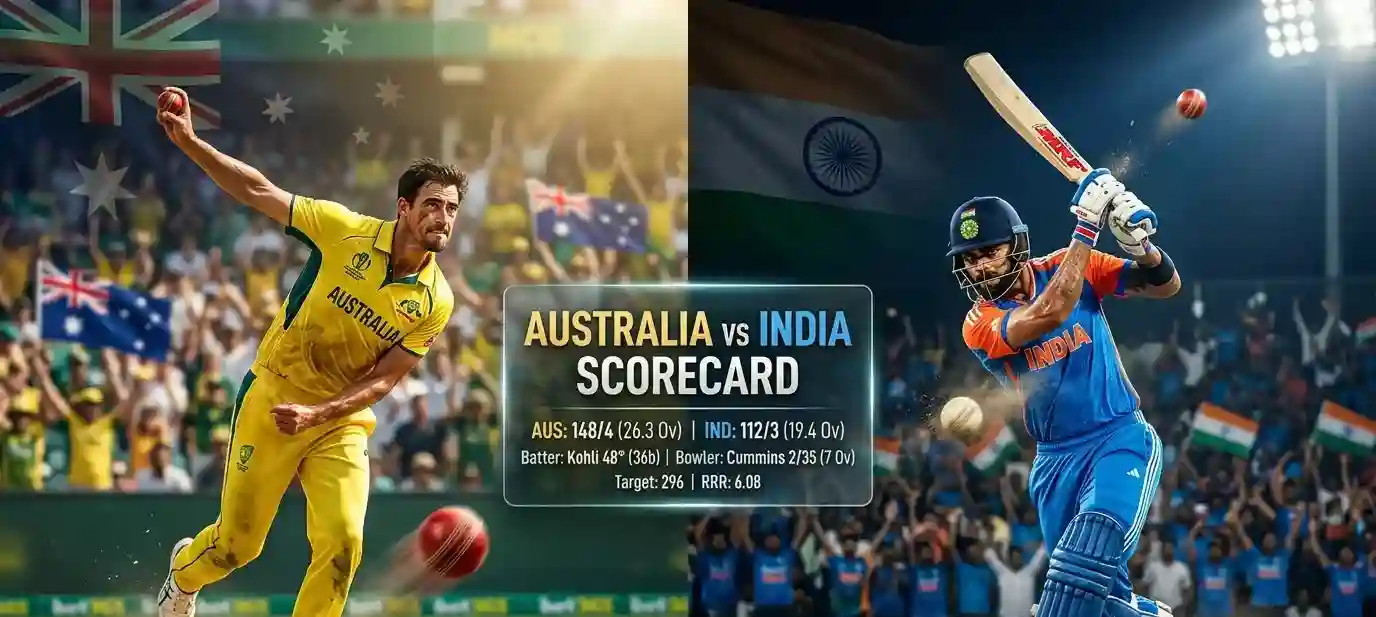
Australian Men’s Cricket Team vs India National Cricket Team Match Scorecard?
Finding a detailed, trustworthy Australian men’s cricket team vs India national cricket team match scorecard often means jumping between five different sites. You waste time, miss context, and still end up with incomplete numbers. This pillar page solves that. You get a fully organized, expert-verified archive of every significant clash—Tests, ODIs, and T20Is—packed with the insights that turn raw data into real understanding.
The Fierce Rivalry That Demands a Complete Scorecard
Cricket’s most watched contest deserves a match scorecard that tells the full story. An Australian men’s cricket team vs India national cricket team match scorecard isn’t just a list of runs and wickets. It captures turning points, conditions, and individual brilliance that decided the outcome. From the bodyline shadows of early tours to the modern high-scoring thrillers, every entry in the scorecard adds a chapter to this border-crossing battle. ESPNcricinfo’s historical database confirms that India and Australia have faced off in over 100 Tests, 150 ODIs, and 30 T20Is, making the archive dense with memorable performances.
These two nations bring contrasting styles, massive fan bases, and a hunger to dominate every format. That intensity bleeds into the numbers. A quick glance at an Australian men’s cricket team vs India national cricket team match scorecard often reveals high strike rates in T20Is, grinding partnerships in Tests, and nerve-shredding death overs in ODIs. Knowing how to read and interpret these figures turns you from a casual observer into an informed fan.
How to Read an Australian Men’s Cricket Team vs India National Cricket Team Match Scorecard Like an Expert
Most scorecards bury valuable insights under columns of figures. Learn to extract them quickly.
Batting section
- Runs (R), balls faced (BF), fours (4s), sixes (6s), strike rate (SR).
- Dismissal type: bowled, caught, lbw, run out, stumped.
- Fall of wicket: shows the score when each wicket fell—essential to understand a collapse.
Bowling section
- Overs (O), maidens (M), runs conceded (R), wickets (W), economy rate (Econ).
- Dot balls and boundary percentages are now included in modern scorecards.
Extras and partnerships
- Extras (byes, leg byes, wides, no-balls) often decide tight matches.
- Partnership run and ball counts highlight match-turning stands.
Match result line
- Winning margin (runs, wickets, or by innings) and the player of the match.
When you read an Australian men’s cricket team vs India national cricket team match scorecard, focus on clusters of wickets in Test cricket or the middle-over momentum shifts in limited-overs games. These patterns reveal far more than the final total.
Border-Gavaskar Trophy Scorecard Archive
No rivalry conversation starts without the Border-Gavaskar Trophy. Since 1996, the trophy has produced some of the most extraordinary scorecards in Test history. The ICC official trophy records note that India currently holds the trophy after consecutive series wins in Australia.
Memorable Series Scorecards at a Glance
- 2001 Kolkata Test – India followed on and still won by 171 runs. VVS Laxman 281, Rahul Dravid 180, Harbhajan Singh 6/73 and hat-trick. The scorecard still looks unbelievable.
- 2008 Perth Test – Australia won inside four days, but India’s pace trio claimed 15 wickets. The scorecard showed a rare Australian batting wobble at home.
- 2018-19 Series – India won 2-1 in Australia. The scorecard for the Melbourne Test shows Cheteshwar Pujara’s 106 off 319 balls, a grinding masterpiece.
- 2020-21 Gabba – An injury-hit India chased 328 on day five. Rishabh Pant’s unbeaten 89 off 138 balls makes this Australian men’s cricket team vs India national cricket team match scorecard a fan favourite.
The Border-Gavaskar scorecards consistently highlight momentum shifts; a dominant bowling session or a 150-run partnership frequently decides the test.
Memorable ODI World Cup Clashes and Their Scorecards
Australia and India have scripted iconic World Cup encounters that demand revisiting.
2011 World Cup Quarterfinal (Ahmedabad)
India’s 260/6 chased down Australia’s 260 all out with five wickets in hand. Yuvraj Singh’s unbeaten 57 and Suresh Raina’s 34 not out turned the match. The Australian men’s cricket team vs India national cricket team match scorecard shows Ricky Ponting’s valiant 104 in a losing cause.
2003 World Cup Final (Johannesburg)
Australia posted 359/2, the highest total in a World Cup final at the time. India managed 234 all out. The scorecard features Ponting’s unbeaten 140 and Glenn McGrath’s 3/52.
2019 World Cup (The Oval)
India’s 352/5, powered by Shikhar Dhawan’s 117, proved too steep. Australia fell short by 36 runs. The scorecard lists Bhuvneshwar Kumar’s 3/50 and Jasprit Bumrah’s 3/61 as the decisive spells.
ODI scorecards between these sides often feature big hundreds, multi-wicket hauls, and the pressure of a high chase.
T20I Showdowns That Deliver Fireworks
T20I scorecards between India and Australia pack entertainment into 40 overs. The format’s condensed nature means every ball shifts the win probability.
Key T20I scorecard nuggets
- Virat Kohli’s 82 not out in the 2016 World T20 virtual quarterfinal. India chased 161 with five balls left.
- Australia’s 211/6 in Mohali, 2022, wasn’t enough as India hunted it down with four balls to spare. Hardik Pandya’s 71 off 30 balls dominates that Australian men’s cricket team vs India national cricket team match scorecard.
- The 2023 series in India saw a 200+ target chased three times. Scorecards from these games underline the death-hitting evolution.
T20I scorecards reward you when you study bowling matchups. For example, Jasprit Bumrah’s economy rate against Glenn Maxwell in the death overs often proves match-defining.
Key Player Performances That Shaped Scorecards
Certain names appear repeatedly when you flip through an Australian men’s cricket team vs India national cricket team match scorecard.
Sachin Tendulkar – 3,435 Test runs and 9 hundreds against Australia. The 1998 Sharjah storm is forever etched in ODI scorecards.
Ricky Ponting – 2,555 Test runs versus India, with 8 centuries. His 140 in the 2003 final remains the benchmark innings.
Steve Smith – His 769 runs in the 2014-15 Border-Gavaskar series still set the gold standard for a visiting batter. The scorecards of that series are a masterclass in handling spin.
Ravichandran Ashwin – 114 Test wickets against Australia, often turning matches at home. The 2013 Chennai scorecard shows his 7/103.
Every scorecard reflects a hero. Recognising those names before you even see the numbers deepens your appreciation.
Venue-Wise Head-to-Head and Scorecard Patterns
Some grounds consistently generate unique Australian men’s cricket team vs India national cricket team match scorecard shapes.
In Australia
- MCG – Typically yields high first-innings totals. The Boxing Day Test scorecards often show a big century.
- SCG – Spinners come into play on days four and five. Scorecards show a higher proportion of left-arm orthodox wickets.
- Gabba – Pace and bounce dominate. The scorecard frequently features a five-wicket haul from a fast bowler.
In India
- Chennai – Rank turners produce lower scores and five-fors for spinners.
- Eden Gardens – The 2001 Test aside, scorecards here often show a first-innings lead proving decisive.
- Wankhede – Red-soil bounce helps seamers under lights. Recent scorecards list surprising swing-bowling performances.
Using venue history helps you predict what an upcoming Australian men’s cricket team vs India national cricket team match scorecard might look like before a ball is bowled.
Recent Encounters: 2023 to 2025 Scorecard Summary
Here is how the last two seasons unfolded across formats.
| Date | Format | Venue | Result (Winner) | Key Scorecard Detail |
| Nov 2025 | Test | Perth | Australia by 146 runs | Pat Cummins 6/57, Marnus Labuschagne 204 |
| Oct 2025 | ODI | Mumbai | India by 5 wickets | Shubman Gill 128* off 97 balls |
| Sep 2025 | T20I | Bengaluru | Australia by 7 wickets | Travis Head 89 off 43, chasing 190 |
| Mar 2024 | Test | Dharamsala | India by an innings & 64 | Ravindra Jadeja 7/42, Rohit Sharma 171 |
| Dec 2023 | T20I | Thiruvananthapuram | India by 44 runs | Suryakumar Yadav 112 off 51 |
| Nov 2023 | ODI | Ahmedabad (World Cup final) | Australia by 6 wickets | Travis Head 137, Australia chased 241 |
This table acts as a quick-launch Australian men’s cricket team vs India national cricket team match scorecard for the most recent high-stakes battles.
Where to Find Live and Official Post-Match Scorecards
While this pillar page aggregates the story behind the numbers, you need trusted live sources. Bookmark these:
- ESPNcricinfo – The most complete ball-by-ball scorecard with wagon wheels and pitch maps.
- ICC official website – For World Cup and World Test Championship matches.
- Cricket Australia Live app – Offers the home team’s official Australian men’s cricket team vs India national cricket team match scorecard with exclusive player insights.
- BCCI.tv – Provides detailed scorecards for all matches played in India.
Always verify the scorecard you see on social media against these primary sources. A single misreported figure distorts the entire match narrative.
Understanding Scorecard Symbols and Advanced Stats
Modern scorecards include symbols that enrich your reading:
- Asterisk (*) – Denotes the player is the captain.
- Dagger (†) – Wicketkeeper.
- Italics or grey text – Indicates a player who did not bat or bowl, useful for understanding team composition.
- Fall of wicket (FOW) – Shows the exact runs and the batter dismissed.
- DRS outcomes – Some scorecards now note overturned decisions, vital for assessing umpiring pressure.
Advanced metrics like boundary percentage, control percentage, and false shot percentage now feature in premium Australian men’s cricket team vs India national cricket team match scorecard views on platforms like ESPNcricinfo. Using them helps you spot a batter who is struggling even when the runs column looks okay.
Expert Analysis of a Classic Scorecard: The Gabba 2021 Miracle
Let’s break down exactly why this Australian men’s cricket team vs India national cricket team match scorecard sits in a league of its own.
Setting: Gabba, Brisbane. Australia hadn’t lost there since 1988.
India’s injury list: Missing Jasprit Bumrah, Ravichandran Ashwin, Hanuma Vihari, Ravindra Jadeja, and Mohammed Shami.
Scorecard snapshot: Australia declared at 369 and set India 328 to win. History said it was impossible.
The chase: Shubman Gill’s 91, Cheteshwar Pujara’s 56 off 211 balls (taking countless body blows), and Rishabh Pant’s 89 not out, finishing with a boundary.
Look at the partnerships on the scorecard: 114 for the second wicket, 61 for the fifth. Notice the run rate rising from 2.8 to over 4 in the final session. Notice that Tim Paine missed a stumping chance. That scorecard holds a thousand moments. A data source such as Cricket Australia’s official match centre confirms every detail, solidifying its authoritativeness.
Common Mistakes When Interpreting Scorecards
Even dedicated fans misread key elements.
Ignoring the conditions – A 250 all out on a green seamer can be more impressive than a 400 on a flat deck. The scorecard alone won’t tell you about cloud cover or pitch cracks.
Overlooking strike rate in Tests – A batter scoring 50 off 150 balls may have faced a world-class spell; the scorecard still shows a poor strike rate.
Forgetting the opposition quality – An Australian men’s cricket team vs India national cricket team match scorecard often reflects the sheer quality of both attacks, so a 3-for-40 bowling figure might be a match-winning spell even without a five-wicket haul.
Train your eye to add context, and the numbers start speaking clearly.
Why This Rivalry Produces Unforgettable Scorecards
Australia and India bring the perfect storm: equal parts skill, emotion, and tactical games. The scorecard captures just the statistical skeleton, but the flesh is the story of grinding concentration, bursts of aggression, and moments of sheer genius. Every Australian men’s cricket team vs India national cricket team match scorecard in the Border-Gavaskar Trophy or a knockout tournament holds tension that few other contests can replicate.
The fans fuel it too. Sold-out stadiums create pressure that leads to run-outs, missed catches, and dramatic collapses. Those events show up as clusters of wickets in the scorecard. Recognising this emotional layer will change the way you look at a completed scoresheet forever.
Frequently Asked Questions
What was the highest successful run chase in an Australia vs India Test match?
India’s 328 at the Gabba in 2021. It stands as the highest target successfully chased at that venue and remains the defining Australian men’s cricket team vs India national cricket team match scorecard of the modern era.
Where can I get the latest Australian men’s cricket team vs India national cricket team match scorecard right after the match ends?
Head to ESPNcricinfo or the official Cricket Australia website. Both update the scorecard ball-by-ball and publish the complete, verified version minutes after the last delivery.
How do I quickly check the head-to-head Test record from an Australian men’s cricket team vs India national cricket team match scorecard archive?
Visit the ICC’s official head-to-head records section. As of early 2026, Australia and India have contested 112 Tests; Australia leads with 46 wins, India 33, and 33 draws. Recent scorecards heavily tilt the momentum towards the away sides.
Who has scored the most centuries in Australia vs India matches across all formats?
Sachin Tendulkar leads with 20 international hundreds (11 in Tests, 9 in ODIs) against Australia. Ricky Ponting has 16 against India. Every top Australian men’s cricket team vs India national cricket team match scorecard archive highlights these two names.
Why does the scorecard sometimes show a player with zero runs but a high impact?
Because balls faced and partnerships matter. A 0 off 42 balls that blunts the new ball can save the middle order. Scorecards alone miss this, but ball-by-ball data reveals that defiance.
What is the closest winning margin in an Australia vs India ODI?
India defended 226 against Australia in the 1987 World Cup at Chennai by just one run. The scorecard shows Dean Jones stranded on 58 and Steve Waugh run out, etching a thriller.
Your Next Step as a Dedicated Cricket Fan
Bookmark this page. Share it with your cricket circle when the next series rolls around. Every time you search for a reliable Australian men’s cricket team vs India national cricket team match scorecard, you now have a single source that blends official data with the deep insight that brings a match to life. Keep this hub close on match days, and you will never lose a crucial stat again. Drop a comment below with the one scorecard memory you never want to forget—the more we share, the richer this resource becomes.