
Calamariere
If you searched calamariere, you’re not alone. The word appears online, and it sparks curiosity quickly. Some readers think it’s a new dish. Others think it’s a special style of calamari. The truth is simpler. It points back to squid, the same seafood you see on menus as calamari. Once you understand that link, everything gets easier. You can shop smarter, cook with confidence, and order with ease. This guide breaks it all down in plain English. You’ll get clear meaning, practical cooking tips, safe handling basics, and tasty ideas that fit a home kitchen in the United States.
What “calamariere” means online
The word calamariere is not a standard dictionary entry yet, so you may see mixed uses. In food posts, it usually points to squid dishes, squid cooking, or a “calamari-focused” style. Think of it as a label people use when they want to sound more niche than “calamari.” That also explains why search results feel scattered. One site calls it a dish. Another calls it a cooking identity. A third calls it a seafood theme. The common thread stays the same: squid on a plate, cooked with care, served with bold sauces, and meant to feel special. If you treat it as a “calamari world” keyword, you’ land on the right recipes and the right taste.
Calamariere vs calamari: a quick clarity check
Here’s the simple split: calamari is a real, established menu word for squid. Calamariere is a newer internet word that leans on the same idea, then adds style and mystery. When you order calamari at a restaurant, you get squid rings or squid tubes, often breaded and fried. When you search calamariere, you may land on recipes, cultural notes, or even brand-style writing about squid. So don’t stress about “the one true definition.” For cooking and eating, treat them as close cousins. If a recipe says calamari, it can fit your calamariere search goal too. The key is how you cook squid so it stays tender.
The word story: pens, ink, and squid
The history behind “calamari” is a fun one. The word traces back through Italian and Latin roots tied to pens and ink. That connection fits squid perfectly because squid carry ink, and their body structure inspired old naming ideas. Merriam-Webster explains the Italian and Medieval Latin links that connect calamari with “ink pot” roots. Etymonline also notes the “pen” meaning in the Latin root, plus the squid’s ink angle. This background matters because it shows why calamari words feel “writing-like.” It also explains why new internet spins like calamariere can sound believable.
What calamari tastes like
Good squid tastes clean, mild, and slightly sweet. The flavor is not loud. The texture is the main event. When it’s cooked right, it feels tender with a gentle bite. When it’s cooked wrong, it turns chewy and tight. That’s why people either love it or swear it off. The best calamari-style plates also carry crunch, salt, lemon, and a dip that wakes everything up. Think marinara, garlic mayo, chili-lime, or a bright herb sauce. Squid also picks up seasonings fast, so a short soak in milk or buttermilk can soften the bite and reduce any fishy edge. Keep the seasoning simple, then let a great sauce do the heavy lifting.
Picking squid at the store
You’ll usually see squid sold as rings, tubes, or “cleaned squid.” Frozen is normal and often a smart buy. It’s usually cleaned, trimmed, and ready for cooking. Fresh squid can be great too, but it needs a close look. Choose squid that smells like the ocean, not sour. The flesh should look glossy and firm, not slimy. If you buy whole squid, check that the skin looks bright and the body feels springy. If you’re new, start with frozen rings or tubes. They cook evenly and save time. Later, move up to whole squid for stuffed recipes. A simple plan beats a fancy plan when squid is on the menu.
Cleaning squid without stress
If your squid is already cleaned, you can skip this. If it’s whole, the steps are simple and quick. Pull the head and tentacles away from the body tube. The insides slide out with it. Remove the clear “quill,” which feels like plastic. Cut the tentacles below the eyes, then remove the beak. Peel the thin skin off the tube if you want a lighter look. Rinse fast under cold water, then pat dry. Dry squid fries and sears better. Wet squid steams, and you lose crunch. Slice tubes into rings for classic bites. Keep tentacles, too. They crisp up well and look great on a plate.
The texture rule: quick hot cook or long gentle cook
This single rule saves most squid dinners. Squid loves extremes. Cook it fast on high heat, or cook it slowly for a long time. The danger zone is “medium heat for medium time.” That’s where rubbery squid is born. Fast cooking means quick frying, quick searing, or a short grill. You’re talking minutes, not half an hour. Slow cooking means braising or stewing, where the squid softens over time. If you’re chasing crisp, go fast and hot. If you’re chasing comfort, go low and slow. This rule matters for calamariere cooking because most home cooks use pans and fryers, so fast methods win.
Crispy fried calamari at home.
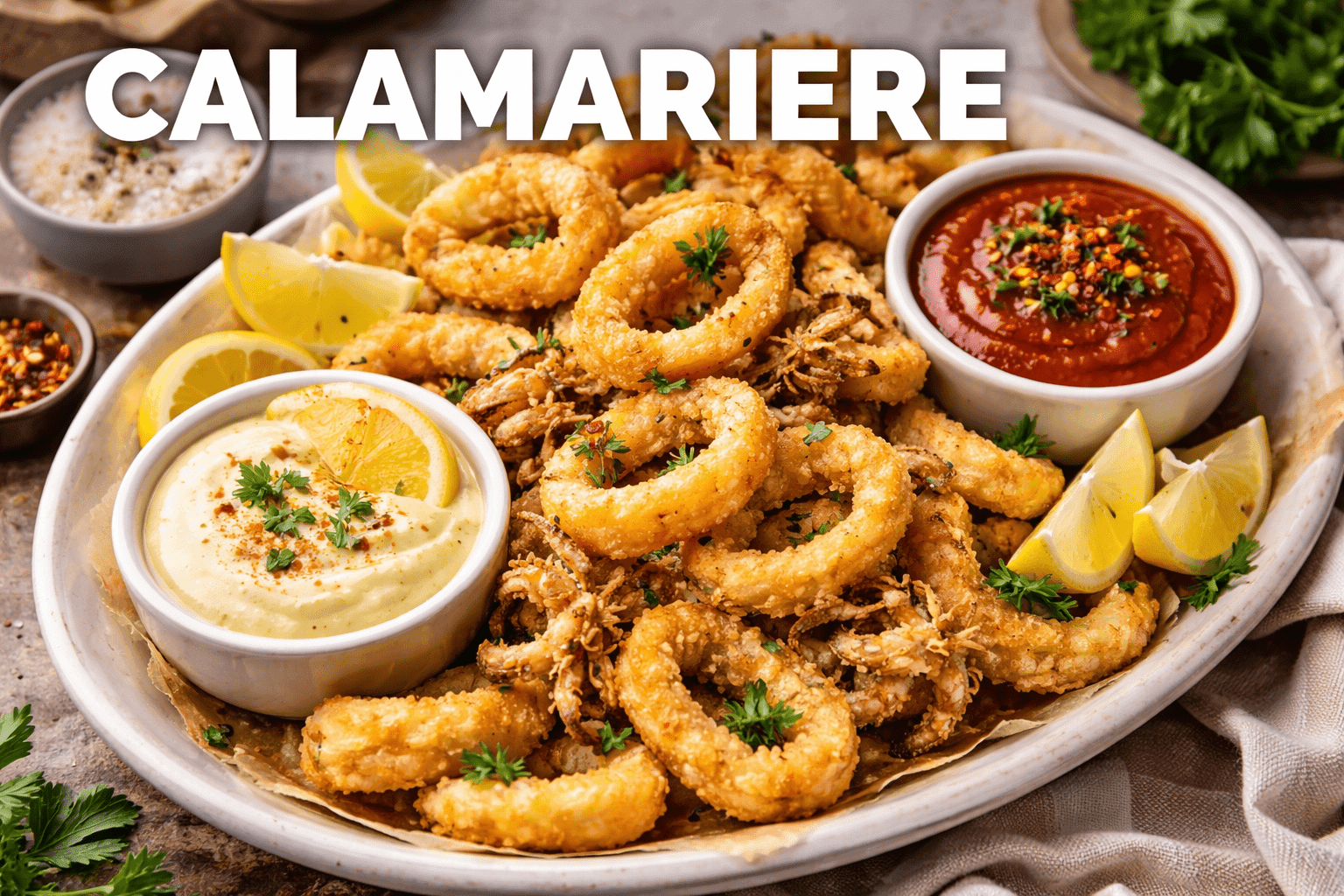
If you want restaurant-style crunch, this is your move. Start with dry squid rings. Toss them in a mix of flour and cornstarch for a lighter crust. Add salt, pepper, garlic powder, and a pinch of paprika. Heat oil until it’s hot enough to sizzle on contact. Drop in small batches. Overcrowding cools the oil and turns the crust soft. Fry just until golden, then drain on a rack or paper towel. Finish with salt right away, then squeeze lemon on top. Serve fast. Crisp squid fades as it sits. This fried method is the easiest path to calamariere that feels bold, crunchy, and satisfying.
Calamariere cooking methods at a glance
| Method | Best cut | Cook time | Heat target | Texture goal | Key tip |
|---|---|---|---|---|---|
| Deep fry | rings, tentacles | 1–3 min | hot oil | crisp outside, tender inside | fry in small batches |
| Pan-sear | tubes, thick rings | 1–2 min per side | high heat | browned edges, soft bite | pat very dry first |
| Grill | tubes, skewered rings | 1–2 min per side | high heat | smoky, springy | oil the grate |
| Braise | whole tubes | 30–60 min | low simmer | soft, silky | keep liquid gentle |
| Air fryer | rings | 6–10 min | high air heat | crisp-ish, lighter | spray oil lightly |
Grill or pan-sear calamari for a lighter plate
Frying is fun, but lighter methods can taste even cleaner. For a pan-sear, heat a skillet until very hot. Add a thin film of oil. Sear squid rings or strips fast, then pull them out. Add garlic, chili flakes, and a squeeze of lemon to the pan, then toss the squid back for a few seconds. For grilling, keep pieces larger so they don’t fall through the grates. Skewers help. Brush with oil and season with salt, pepper, and dried oregano. Grill very fast, then finish with lemon and chopped parsley. This style of calamari tastes bright and fresh, and it pairs well with salads and rice bowls.
Sauces that match calamariere
Sauce is where squid becomes addictive. Marinara brings sweet tomato and garlic. Lemon aioli gives a creamy bite. A simple hot honey adds sweet heat. If you like tang, try yogurt mixed with lemon zest, salt, and crushed garlic. If you like bold spice, mix mayo with sriracha and lime. Keep dips thick so they cling to rings. If you want a lighter finish, skip the dips and use a “drizzle sauce” instead. Mix olive oil, lemon juice, salt, pepper, and chopped herbs. Pour it over the squid right before serving. A good sauce makes calamari feel like a complete restaurant plate, even at home.
Sides that turn it into a full meal
Squid can be a snack, but it can also be dinner. The right side makes it feel filling. Fries are the classic partner. A crunchy slaw works too, since it cuts through oil and adds snap. Rice works well with grilled squid, since it soaks up sauces. Warm bread is perfect for marinara dips. If you want a lighter meal, go with a big salad and a bright dressing. Add tomatoes, cucumbers, red onion, and olives. If you want comfort, pair squid with pasta, garlic butter, and herbs. Keep sides simple. Squid cooks fast, so you want sides that don’t steal attention.
Nutrition snapshot and allergy notes
Squid is a lean seafood choice before breading and frying. In nutrition databases based on USDA FoodData Central, squid shows up as a protein-forward food, and calories stay low in raw form. Once you bread and fry, calories rise because flour and oil add extra energy. Squid also contains cholesterol, so that matters for some diets. If you track sodium, watch your seasoning and sauces. Allergy note: squid is a mollusk. People with shellfish allergies should use caution and talk with a clinician if unsure. If you’re serving guests, ask first. A safe, clear plan makes the meal feel relaxed.
Safe handling and cooking temperature
Seafood safety is simple when you follow a few habits. Keep the squid cold on the way home. Store it in the fridge and cook it soon. Use clean boards and clean knives, and keep raw seafood away from salad items. The U.S. Food and Drug Administration recommends cooking most seafood to 145°F for safety. If you don’t use a thermometer, look for squid turning opaque and firm, with a clean look and no raw gloss. Refrigerate leftovers quickly. Don’t leave cooked seafood sitting out. These steps keep calamari fun and worry-free, from prep to plate.
Ocean-friendly squid choices
If sustainability matters to you, squid can be a smart pick, but the source matters. Seafood Watch rates some squid fisheries as better choices than others. California market squid caught with purse seines earns a “Best Choice” rating in their guides. Other squid sources can rate differently, based on stock data and fishing impacts. When you shop, check labels for origin and catch method when that info is available. If you order out, ask what type of squid they use. You may not get a full answer, but asking shifts demand. Small choices add up over time.
Leftovers: storing and reheating without rubbery bites
Squid is best fresh, but leftovers can still taste good. Store cooked squid in a sealed container in the fridge. Keep it dry, and keep the sauce separate when you can. Reheat fried squid in an oven or air fryer to bring back crisp edges. Microwave heat makes it soft fast. For grilled or seared squid, reheat in a hot pan for a short time. Add a splash of oil, then toss quickly. Don’t cook it long again. You just want it warm. If the squid already feels a bit chewy, turn it into a new dish. Chop it, toss it into pasta with garlic and olive oil, then serve hot.
Ordering tips in the US: what to ask for
Restaurant squid can vary a lot. One place serves thick rings with heavy breading. Another serves thin rings with a light dusting. If you want crisp, ask if they fry it to order. If you want tender, ask for thin rings or “flash fried.” If you want a cleaner taste, pick grilled squid when it’s available. Ask what sauce comes with it, then swap if you prefer marinara or aioli. If you’re exploring calamari as a new food adventure, order a simple version first. Then try spicy versions, stuffed squid, or salt-and-pepper squid later. Starting simple makes the flavors easier to learn.
Common mistakes and quick fixes
Most squid problems come from three things: water, wrong heat, and wrong timing. If squid is wet, it won’t crisp. Pat it dry, then coat it right before cooking. If the oil is not hot enough, the crust turns oily. Heat the oil well, then fry in small batches. If squid cooks too long on medium heat, it turns rubbery. Use high heat and a short time for rings. If you want slow cooking, use a gentle simmer and give it time. Another common miss is bland seasoning. Salt needs to hit the food right after frying. Finish with lemon too. These small fixes can turn an “okay” batch into a plate you’ll crave again.
Calamariere quick checklist
Use this mini checklist before you cook. Start with clean squid rings or tubes. Pat them very dry. Season your coating well, and coat right before cooking. Heat the oil hot, then fry small batches. Pull squid as soon as it turns golden. Salt it right away. Add lemon right before serving. Pick a thick sauce that clings. Serve fast for the best crunch. If you grill or sear, keep cook time short and heat high. If you stew, keep the heat low and the time long. Follow these steps and your squid will stay tender, bright, and satisfying from the first bite to the last.
FAQs
Is calamari the same thing as squid?
Yes. Calamari is a menu word used for squid dishes. You’ll see it as rings, tubes, or tentacles. The taste is mild, and the texture depends on cooking time. Fast cooking keeps it tender. Medium heat for too long makes it chewy. If you don’t like chewy squid, try thin rings cooked quickly. Also, try grilled squid, since it can feel lighter. Dips also change the whole experience. Marinara tastes classic. Lemon aioli tastes richer. If you start with a simple order, you can learn what style you like.
Why does squid turn rubbery?
Squid turns rubbery when it sits in the “middle zone” of cooking. That means medium heat for several minutes. The muscle tightens and stays tight. The fix is extreme. Cook it very fast on high heat, or cook it slowly in a braise. Both paths can taste great. Most home cooks want crisp rings, so fast frying or fast searing works best. Pat the squid dry, too, since wet squid steams and stays tough. Once you learn the timing, the texture becomes easy to control.
Do I need to soak the squid before frying?
You don’t have to, but a short soak can help. Many cooks soak rings in milk or buttermilk for tenderness. It can also soften strong seafood notes. If you soak, dry the squid well after. Dry surface matters for crunch. Then coat it in flour plus cornstarch for a light crust. Season the coating well. Fry in hot oil. Don’t crowd the pan. Drain after frying, then salt right away. That quick routine gives you the crisp outside and tender bite most people want.
What oil is best for frying calamari?
Use a neutral oil with a high smoke point. Canola, peanut, and vegetable oil work well. Olive oil is not ideal for deep frying, since it can smoke and taste heavy. Heat control matters more than the oil brand. If the oil is too cool, the squid absorbs the oil and turns greasy. If the oil is too hot, the coating burns fast. Fry small batches so the oil stays hot. Drain on a rack or paper towel. Then serve fast, since crunch fades as it sits.
How do I know squid is cooked without a thermometer?
Look for color and texture. Squid turns opaque and firm when cooked. Rings should look solid white, not glossy and raw. For fried rings, the coating turns golden fast, and that’s often a good timing cue too. For seared squid, you’ll see browned edges within a minute or two. If you’re unsure, use a thermometer next time. The FoodSafety.gov repeats the 145°F guideline for seafood in its handling tips.
Can I cook squid from frozen?
Yes, and many people do. Thaw it in the fridge for the best texture. If you’re in a rush, place sealed squid in cold water and change the water as it chills. After thawing, pat it very dry. Drying matters even more with frozen squid because it releases water. Then cook fast on high heat for rings, or braise slowly for stuffed tubes. Frozen rings are a great beginner choice since they cook evenly. With good drying and good timing, you can get a crisp, tender result at home.
Conclusion
Squid can feel tricky at first, yet it becomes easy once you learn the timing. Keep it dry, cook it the right way, and pair it with a sauce you love. Start with a simple plate, then explore grilled versions, braised dishes, or spicy dips. If you try a new method this week, share what you made and what sauce you picked. Your next batch can be even better, and it only takes a few smart tweaks to get that crisp bite and tender center every time.
 You Also Like To Read: Nadine Caridi
About the Author